When Trying Too Hard Loses You the Job: The Truth About Over-Styling Your Audition Look

You mapped out your outfit three days in advance. You steamed it twice. Your accessories were coordinated down to the earring backs, and your shoes were buffed to a shine that could double as a mirror. You walked into that audition room feeling ready — and then you didn't book it.
Here's the uncomfortable thing nobody in your circle is saying out loud: sometimes, that level of polish is exactly what costs you the role.
This isn't about showing up sloppy or treating a casting session like a grocery run. It's about understanding a very specific psychological dynamic that plays out in audition rooms every single day — one that separates the performers who consistently book from the ones who consistently get called back but never confirmed.
What Casting Directors Are Actually Reading When You Walk In
Before you say a single word or hit your first mark, the casting director is already forming an impression. And it's not just about whether you look good. It's about whether you look right — for the project, for the character, for the world the director is trying to build.
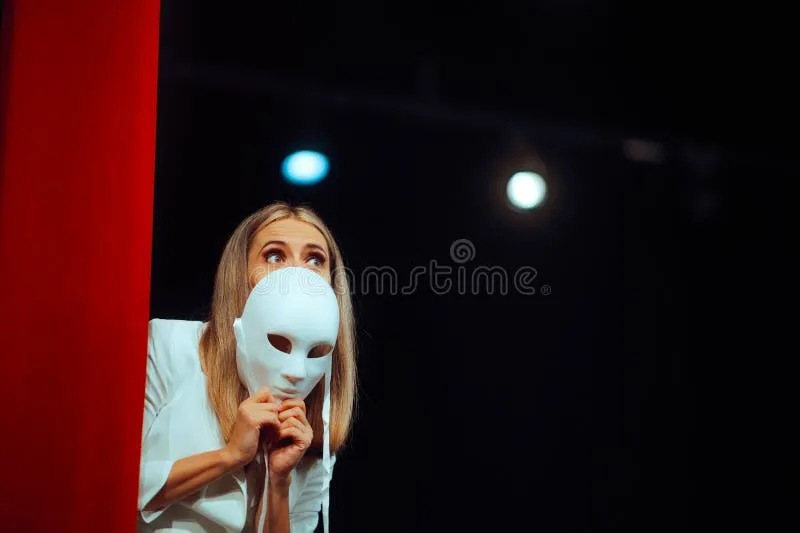
When someone walks in over-styled, the read isn't always "wow, they really care." More often, it's "they're performing the idea of an audition rather than showing me who they actually are." That's a red flag, not a green light.
Industry insiders consistently point to the same pattern: performers who over-construct their appearance tend to over-construct their performance too. The styling becomes a tell. It signals someone who is managing perception instead of inhabiting a character — and casting directors, who do this for a living, can spot that gap almost immediately.
The Desperation Signal You Don't Know You're Sending
There's a psychology concept sometimes called "try-hard energy," and it applies directly to audition styling. When your look is too deliberate — too many intentional choices stacked on top of each other — it can read as anxiety dressed up as confidence.
Think about it from the other side of the table. A casting director sitting through forty appointments in a day isn't just evaluating talent. They're evaluating ease. Can this person hold space without needing to control everything around them? Do they feel settled in their own skin, or are they hiding behind a look they assembled like armor?
Over-polishing often comes from a place of insecurity, even when it doesn't feel that way in the mirror. And the irony is brutal: the more effort you put into looking "perfect," the more you may be telegraphing that you don't fully trust yourself to be enough without it.
Project Calibration Is Everything
This is where the real skill lives. The goal was never to look bad or to dress without intention — it's to dress with the right intention for what you're actually walking into.
A commercial audition for a national fast-casual chain? That calls for something approachable, relatable, a little lived-in. A sharp blazer and a blowout might read as too aspirational for the brand's consumer. A gritty indie film audition? Showing up in head-to-toe coordinated neutrals with a full face of makeup might signal that you haven't done your homework on the tone.
The performers who consistently book have usually done one thing the over-styled crowd skips: they've actually researched the project before deciding what to wear. They look at the director's previous work. They read the breakdown carefully. They think about the world of the story, not just the character description, and they let that inform their choices rather than defaulting to "what makes me look my best."
Looking your best and looking right are two completely different things. Booking work requires the second one.
What "Calculated Authenticity" Actually Looks Like
The phrase gets thrown around a lot, but it has a practical meaning. Calculated authenticity means making deliberate choices that feel unconstructed — choices that allow the casting director to project the character onto you rather than seeing the effort you put into the outfit.
In practice, this might mean:
- Wearing something in the character's palette or silhouette without going full costume (which is its own mistake).
- Pulling back one element you'd normally include — skipping the statement earrings, leaving the blazer at home, choosing the flat over the heel — so the overall look has breathing room.
- Letting your face and energy carry more weight than your wardrobe. Casting directors are looking for something alive in your eyes. An over-styled look can visually compete with that.
- Dressing for the energy of the project rather than the prestige of the audition. A scrappy startup's ad campaign and a luxury brand's campaign require completely different versions of "professional."
The Confidence Trap
A lot of performers lean into heavy styling because it makes them feel more confident walking in. That's real, and it's not something to dismiss entirely. But there's a difference between wearing something that grounds you and wearing something that shields you.
If you find yourself thinking "I can't go in there without X" — a specific pair of shoes, a certain level of makeup, a particular jacket — that's worth examining. Because the room doesn't owe you the conditions under which you feel confident. Part of being a working performer is building the kind of internal stability that doesn't depend on the outfit.
The performers who make casting directors feel something the moment they walk in aren't usually the most polished people in the waiting room. They're the most present ones.
A Practical Reset Before Your Next Audition
Before your next appointment, try this: lay out what you were planning to wear, then ask yourself honestly — is this outfit for the character and the project, or is it for me? If it's mostly for you, strip it back one layer. See what happens when you give the casting director a little more room to imagine.
Your job in that room isn't to arrive as a finished product. It's to arrive as a possibility. And sometimes, the most powerful thing you can wear is a look that leaves space for the story to begin.
The tryout is your moment — but it's not a runway show. Know the difference, and you'll be ahead of most of the people sitting in that waiting room with you.